I found 251 results for monte san giorgio

PARISH CHURCH

Churches at San Felice del Benaco
http://www.gardalombardia.it/ImmaginiProdottiP/chiesa-parrocchiale_46_420x1000.j...

Mountains with ancient history: Valle Camonica

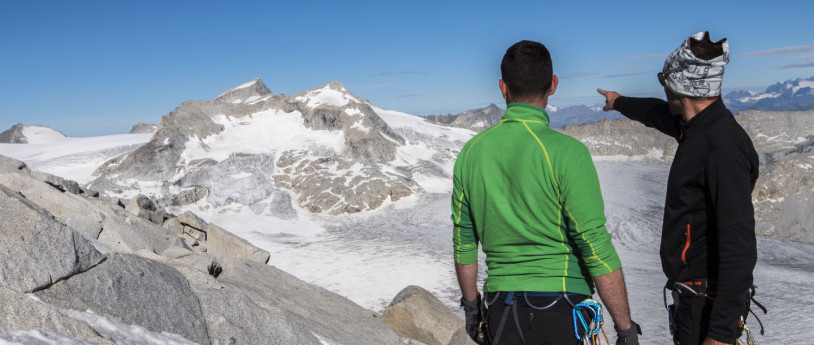
These mountains guard a World Heritage Site and offer nature holidays spent climbing, walking and pedalling   ExcursionsThe Valle Camonica is a wide, level valley in the central Alps. Crossed by the River Oglio, dominated by the Adamello mountain range, the valley is home to one of the world’s biggest collections of prehistoric rock art, the first site in Italy to be added to the list of UNESCO World Heritage sites. This area, with its many lakes, mountains, nature parks and immense landscapes, takes visitors back ten thousand years on a journey in time from the Mesolithic period to modern day. 5 mountain refuges on a circular route of Val MalgaA lovely one-day trail from Ponte del Guat (Guat bridge) in Val Malga takes hikers across the valley, discovering the welcoming mountain refuges of Valle Camonica Premassone, Tonolini, Baitone and Gnutti. The latter marks the start of an alpine trail that then leads up to the top of the Adamello. The Val Malga hike calls for some care on the stretch between the Gnutti and Baitone refuges and can be completed in 4 hours. Meanwhile, those preferring a hike lasting several days can follow the Alta Via dell'Adamello (Path/Sentiero no. 1), a wonderful trail, but only for fit hikers carrying all the equipment needed for high alpine routes. It includes in fact some rather exposed via ferratas (with fixed ropes, ladders, etc.). This route goes from Breno to Edolo and must only be undertaken by very expert hikers or with mountain guides. Each stage and each mountain refuge are starting points for short-medium hikes. The route can however also be enjoyed as one-day hikes, thanks to paths that link it with the valley bottom. Three-day Glacier hikeThe Adamello also offers the chance to enjoy the experience of a hike to the glacier. The Pian di Neve is a hikers’ dream because on clear days it allows amazing views reaching as far as Monte Rosa. Mountaineering fans can, on the other hand, test their skills along the skills along the Sentiero dei Fiori, a panoramic ferrata that ensures incredible views, suitable for experienced hikers.. The Oglio cycle pathFrom gentler walks to hikes uphill or along the trails and steep downhill unmade paths:discovering Vale Camonica by bike is spectacular. A cycle and pedestrian path starts at the Passo del Tonale pass, linking no fewer than 280 km of paths along the Oglio riverbanks and winding through the varied landscape of the valley, until it comes to the banks of Lake Iseo and through the Franciacorta vineyards. For keen mountain bikers,the Adamello Bike Arena offers more than 500 km of trails between the Valle Camonica and Va di Sole valleys, even entering the Stelvio and Adamello nature parks. The Passo del Tonale also has downhill and free-ride trails. Bienno, one of Italy’s most beautiful villages In Biennio, which belongs to the Club de I Borghi più belli d’Italia (“The most beautiful villages in Italy” club) visitors get a chance to relive a medieval atmosphere. Walking down its streets, they can see characteristic houses, towers and noble buildings, visit the Fucina Museo (Forge Museum) with its impressive waterpowered trip hammer and the (also water-powered) mill with adjacent museum of country life. A must-visit is the church of Santa Maria Annunciata, which still has beautiful frescos by Romanino, one of the most important painters from the Lombardy school and by the local artist Pietr da Cenno and his atelier.    Highlights1. Art. Worth a visit are the Pieve di San Siro church and the Monastero di San Salvatore in Capo di Ponte, both evidence of Romanesque architecture in Valle Camonica, and the Shrine to the Via Crucis in Cerveno with the Sacro Monte, or Sacred Mountain. 2. History. Valle Camonica, also known as Valle dei Segni, or the Valley of Signs, conserves a huge heritage of rock engravings. The Naquane National Park in Capo di Ponte and the MUPRE (National Museum of Prehistory) in Valle Camonica are both must visits. There are other parks in Dafro Boario Terme, Ceto, Cimbergo, Paspardo, Sellero, Sonico and Ossimo. 3. Sport. Renowned as an active holiday destination in both summer and winter, Valle Camonica has plenty to offer (hiking, MTB and road bike paths, cycling tourism, climbing, skiing, snowboarding, snowshoe walking and much more) with Ponte di Legno - Tonale,Borno, Montecampione and the Aprica mountain pass. 4. Food and wine. Foodies should check out the local dairy products, especially Fatulì (a Slow Food Presidium), a smoked goat’s cheese made with raw milk from the Bionda dell’Adamello goat, which can be tasted in the mountain refuges in Val Saviore and Silter Doc, a mountain cheese made with raw cow’s milk. 5. Events. In June, the Fiera della Sostenibilità della Natura Alpina is a sustainability fair organised by the Valle Camonica Mountain Community – Adamello Park. A must-visit is the Market-Exhibition in Bienno, with over 200 exhibitors from all over Italy and stalls with typical traditional valley dishes. Finally, the “Del Bene e del Bello” exhibition of cultural heritage.
Montagne di storia antica: la Valle Camonica

Lecco in a weekend

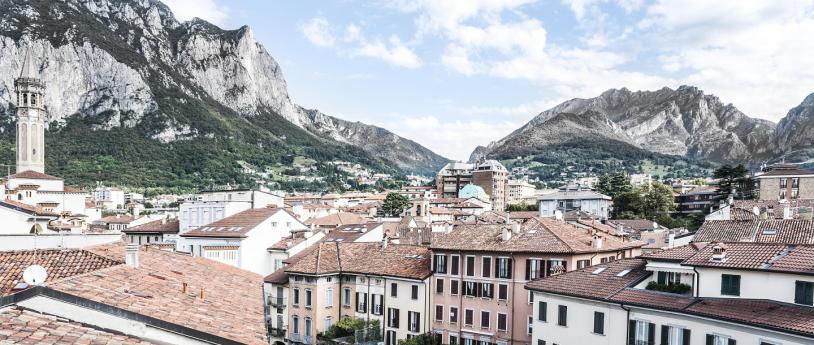
Discover Lecco in 48 hours, starting from the traces of a timeless novel, “The Betrothed”. A story within the story

Hiking: 6 easy routes

Walking in the Lombardy mountains: 6 routes suitable for kids
Gemelli e Pizzo Becco

Fontana dei Fiumi

Towns and Villages near Lake Iseo

The villages and towns on Lake Iseo are jewels of narrow streets and shops, between history and naturalism.

Cycling from Aprica to Val Belviso

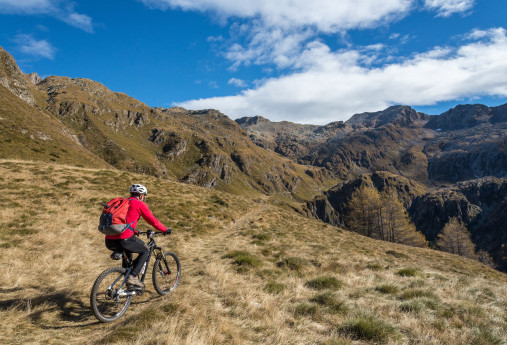
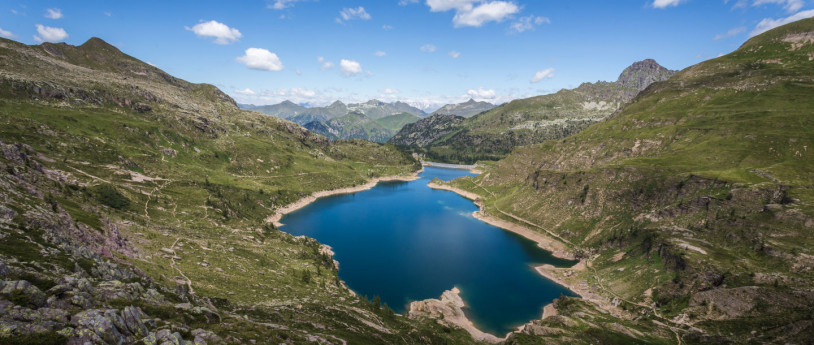
Highest point 2320 mTotal elevation gain 1550 mTotal elevation loss 1550 mTotal climb 18 kmTotal descent 16,5 kmTotal distance 25,4 kmDuration 6-8 hCycling rate (%) 80% This route extends wholly through a valley belonging to the Orobic Alps.  Val  belviso  is  the  last  eastern  valley,  it  is  long,  deep  and  nar-row, but along the path going south from Alpe Magnolta to Passo di Venerocolo it seems bright and wide. The outline of Monte Torena  –  the  last  high  peak  of  Orobic  Alps  –  dominates  the  other  side  westwards reflecting its shape into the waters of the huge artificial lake on the valley bottom. Once you get to the pass dividing us from the  Province  of  bergamo,  you  will  find  some  alpine  lakes  wedged  among  the  rocks  and  the  grassy  small  hills.  The  descent  runs  on  a  trail at first and then turns into a dirt road through the whole valley, both alongside the lake and under the dam. In San Paolo the Rifugio Cristina is a nice place to grab calories and shelter. You can  start  from  the  car  park  nearby  Magnolta  ski  runs  and  take  the dirt road climbing up to the left of the cableway. The sign indicates  Malga  Magnolta  and  Passo  Venerocolo.  You  can  easily  cycle on the first half of the uphill dirt road, which then gets much steeper  from  the  mountain  huts  in  Corna  Alta  (1457  m)  to  the  finish  of  the  cableway  (1870  m),  so  that  you  may  need  to  carry  your  MTb.  This  is  a  challenging  ascent  but  in  summertime  you  can  use  the lift up to Magnolta. Halfway up the second ski lift, at 1940 meters, the track becomes a flat trail, which goes into the wood, turns south and enters Val belviso. you have to ride for about 13 km on a flat path going sometimes gently uphill, going past Malga Magnola (1997 m) and crossing the Valle del latte and the Valle di Pisa.  You have  to  pay  attention  to  some  exposed  stretches.  The  first  part  of  the  descent  from  Passo  di  Venerocolo  (2314  m)  to  the  dirt  road  at  2000 meters above Malga di Campo (1816 m) is steep and not very flowing. The downhill ride alongside the artificial lake and through the  remaining  part  of  Val  belviso  does  not  hinder  your  fun.  The  route ends with the ascent on a paved road from Ponte Ganda (906 m) to the resort town of Aprica.

Romagnese

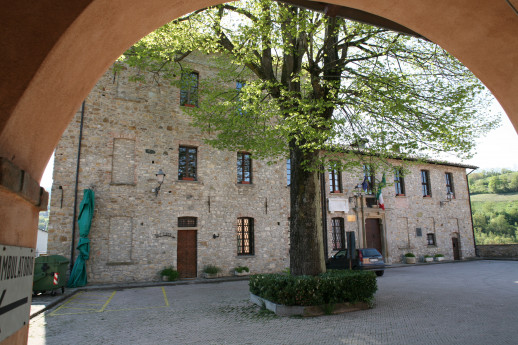
Romagnese preserves the features of a medieval village, although its origins are much older, as evidenced by archaeological finds of Roman origin. Much of its historical prominence is linked to the rise of the Dal Verme family. The Dal Verme lineage governed these lands and built the 14th-century castle. Today, as a testament to its former splendor, two structures remain from the original complex: the tower and a sandstone building with a beautiful 19th-century portal. In the municipality of Romagnese, at an altitude of 950 meters on the slopes of Monte Pietra di Corvo — a striking outcrop of dark volcanic rock — lies the Pietra Corva Botanical Garden. The garden was established to conserve and adapt mountain plants native not only to the Alps but also to other mountain ranges such as the Himalayas and the Andes. Thanks to the area’s unique microclimate, these species have adapted perfectly. A small part of the Monte Alpe Nature Reserve (part of the Natura 2000 Network) also lies within the municipality of Romagnese, bordering the towns of Menconico and Varzi, and is managed by ERSAF – Regione Lombardia. In the castle tower of Romagnese is located the Museum of the Lombard Apennines of the Four Provinces. The museum was created to preserve and showcase local traditions: it houses tools, implements, and machinery once used in the agricultural and artisanal life of the region. The parish church, dedicated to Saint Lawrence, contains a painting attributed to Palma il Giovane and a distinctive wooden altar known as the “Rosary Altar.” Among the many oratories surrounding the village, one worth visiting is the Oratory of Penicina, dedicated to the Madonna of Caravaggio. Its Pisan-style façade is built with alternating bands of brick and sandstone, while the pilasters date back to the 16th century.
Romagnese

Teglio walk- Verida- Palama- Ravarola- Teglio

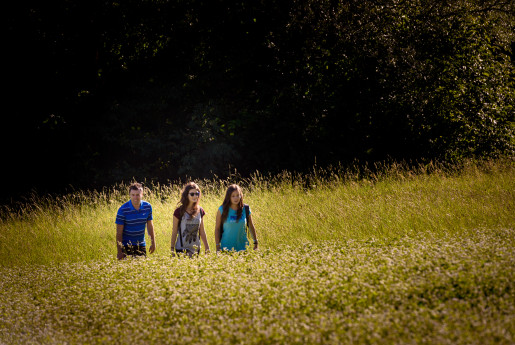
Simple walk through the characteristic rural mid-mountain environment, where cultivated fields, meadows, vineyards and orchards alternate. Depending on the season, typical tellin crops of potatoes, barley, rye and buckwheat can be seen.

To Saint Michele and Saint Martino

To Saint Michele and Saint Martino

Famous uphill cycling routes: Valfurva

The spectacle of the glaciers on the Confinale circular trail and great uphill cycle trails make this mountain popular with hikers and keen cyclists
Le salite dei campioni: la Valfurva

The “Triangolo Lariano”: the Corni di Canzo mountain group

These mountains are amazing for outdoor-life lovers with a choice of steep cliffs for climbers, erratic rocks for boulderers and high-altitude hiking trails with a lake view